


Das Reboot: Football & Pleasure

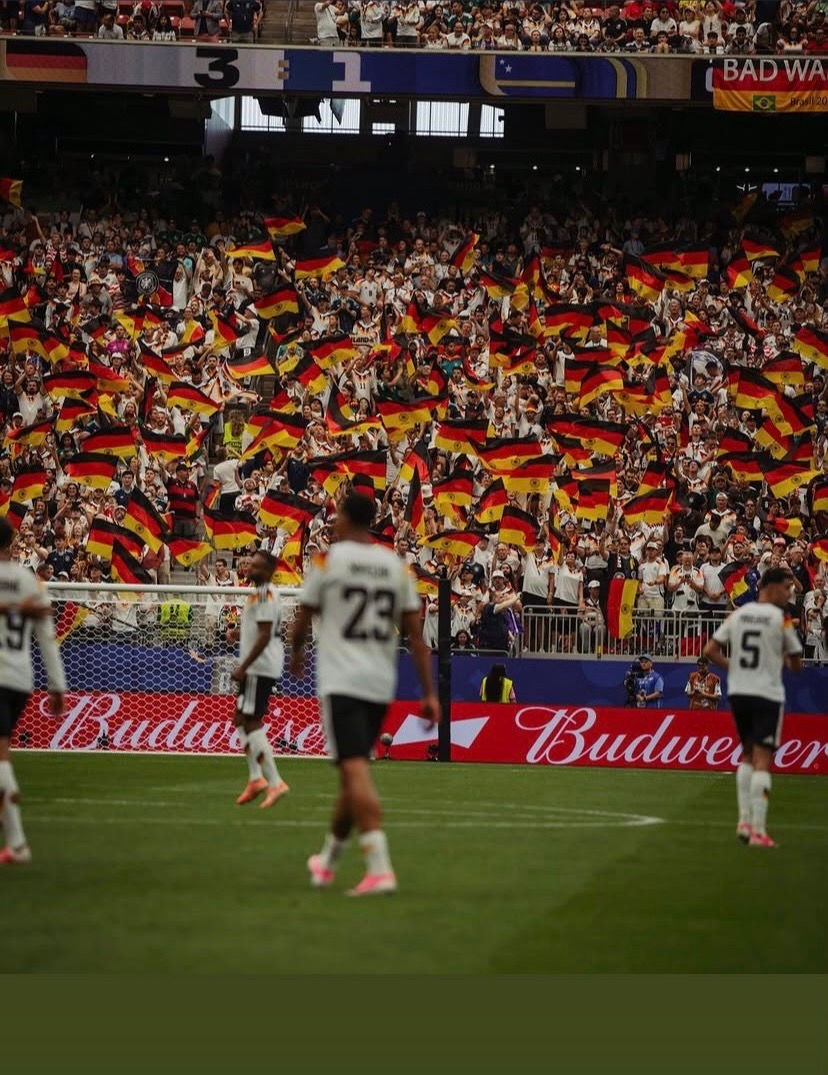
Twelve years ago, the German national team stood at the very top of world football; now, after another abysmal World Cup, it seems as though we are reduced to footballing nothingness.
I was devastated. I still am, to be completely truthful. I am a passionate football fan, and the German team is my team, so this was never going to register as a disappointing result I could shrug off before getting on with the rest of the year. Football gets under my skin. It brings me ridiculous amounts of joy, occasionally ruins perfectly lovely evenings and inspires emotional responses entirely disproportionate to twenty-two people chasing a ball around a pitch. That is part of its magic, and I wouldn't want it any other way.
Blågult will always have my affection, and with my Swedish side there is every reason they should. I cheer for them, enjoy their successes and would be very happy to see them cause some trouble on the world stage. But football hearts are wonderfully unreasonable things, and mine beats fiercely for Germany. The Germans are the team I ache for, the team whose defeats follow me around and whose triumphs can make an entire summer seem different. When it comes to football, I bleed black, red and gold.
That is why this World Cup still hurts so deeply. It wasn't simply the result; it was everything the result represents. Twelve years ago, the German national team were World Champions. We were the most dominant football team in the world, and as a true fan of the sport, there was something truly intoxicating about the certainty my team would die to score, die to win. The DFB team had stature, confidence, intelligence, and most importantly, an identity. We belonged at the very top, no doubt. Other teams respected us and, rather deliciously, feared us. You entered a tournament expecting the Germans not merely to participate, but to matter and to win, right until the very end.
Three dreadful World Cups later, that world is painfully distant and non-existent. The contrast between 2014 and 2026 is difficult for me to comprehend. We have gone from looking at the rest of world football from the top to wondering how a national team with Germany's history, talent, culture and sheer will to be victorious could have declined so comprehensively. I miss our authority, our confidence in, and deep knowledge of our ability, the fact that opponents understood exactly what they were facing. I miss entering a World Cup believing my team can win because the team on the pitch justified the expectation.
Most of all, I crave that kind of ambition, that particular drive again. I don't want respectable. I don't want a decent quarter-final followed by congratulations for encouraging progress. I want the German team competing to become World Champions again. I want the expectation surrounding the DFB team to rise far beyond being pleased that we have made it a little further than last time. I want a generation of players for whom reaching the last stage isn't the achievement but the point at which the real ambition begins.
There is something exhilarating about that kind of sporting hunger. It isn't arrogance; it is the refusal to make peace with diminished expectations. I want my team to look at the number one spot without embarrassment and admit, yes, this is where we intend to be. Not someday, vaguely, but today!
For a while after this World Cup, I didn't care to find anything positive in what had happened. I was too sad, too angry and too devastated. Sometimes disappointment needs to remain and be contemplated before we rush in and demand that it become useful. I had no appetite for perspective, silver linings or premature optimism.
Only after letting the result settle did something else begin to emerge alongside my utter devastation. I am no less appalled by where we find ourselves, but I have started to recognise possibility in the severity of the crisis. When the collapse becomes an undeniable reality, there is little value in pretending that a few adjustments around the edges will put everything right.
There is a Chinese word I have returned to throughout my life: 危机 (wēijī), crisis. It is often rather romantically translated in the West as combining 'danger' and 'opportunity', which isn't linguistically quite right. What has always fascinated me is something more subtle. The second character, jī, can carry the sense of a critical or pivotal point, a moment at which change can occur. For me, this is where opportunity begins. A crisis is not automatically an opportunity simply because we give something painful an optimistic interpretation. But a crucial turning point creates a choice about what happens next, and that choice is where I see possibility. I would never have chosen this collapse as the route towards renewal and future greatness. I would much rather have spent the past twelve years watching the DFB team reign supreme. But we are here. This is rock bottom; this must become the turning point.
What I hope comes next is nothing less than a comprehensive Das Reboot - pun intended. Not a cosmetic and superficial refresh designed to make the next tournament slightly less painful, but a genuine rebuilding of my team with the ambition of returning to the very top of world football and staying there consistently. I want the weaknesses exposed by these twelve years addressed, the strengths gathered and sharpened, the potential developed and the courage found to use paths that haven't been walked before.
Reaching the nadir features a brutal kind of clarity. When things are almost working, there is always the temptation to tinker a little but preserve most. When they clearly aren't, you have permission to break down everything to the smallest part. What remains a genuine strength? What has become a weakness? Where is the potential that isn't being realised? Which assumptions belong to another era? What deserves protecting, what needs changing, and what should finally be left behind to achieve the excellence we are famous for?
Most excitingly, what could the German team become next? The fact that I don't yet know what the next German team will look like is not depressing to me. It is exhilarating.
I don't want 2014 back. I want what 2014 represented: greatness. That distinction matters enormously to me. I treasure the memory of the DFB team being World Champions, but merely focusing on recreating that team would be nostalgia rather than renewal. I am longing for the next great German team, with its own players, personalities, ideas, audacity, confidence and identity.
Perhaps I am particularly uncompromising about this because excellence is something I strive for in my own life, too. Not perfection, and certainly not the joyless exercise in constantly proving oneself, but the exhilaration of discovering how good something can become when you give it your all with curiosity, attention and best effort. I understand the thrill of aiming high, of recognising unrealised potential and wanting to find out just how far it can go. That is what I want for my team: to take everything German football still possesses, confront everything that has gone wrong and create another era of supremacy.
Somewhere, the pieces of that future already exist. There is talent to develop, potential to unlock, weaknesses that can become strengths, and ideas that have not yet been trialled. There are young players whose names we barely know today, who will one day define this era. And I am absolutely delighted to see Jürgen Klopp taking the reins. Few people in football embody the power of transformation the way he does: the ability to find and utilise talent, deep belief, the importance of personality paired with enormous ambition to turn them into something greater than their individual parts.
If you want to understand why the prospect of Klopp shaping our future excites me quite so much, I highly recommend the series Doubters to Believers. The title alone could hardly be more appropriate. The journey from doubt to conviction, from diminished expectations to believing wholeheartedly in what is possible, is precisely what I hope lies ahead for the German team. I never ceased to be a believer of German football greatness, but I am ready and desperate to experience it again.
Perhaps that is another reason I refuse to confuse a low point with a lowering of standards. The route may need to change. Work has to be done. Uncomfortable questions need to be asked. But the aspiration doesn't have to shrink with the circumstances. For me, striving for excellence leaves plenty of room for experimentation, pleasure and getting things wrong. In fact, I think it requires them. You try something unfamiliar, discover what works, abandon what doesn't, become curious about weaknesses and flaws instead of being embarrassed, and many a time stumble across a strength you didn't know you possessed. Excellence isn't a fixed state you return to. It moves with you, grows and diminishes with you, and keeps evolving as you do.
Perhaps this idea of a pivotal moment has been occupying me more than usual because I have been going through a very different kind of hiatus myself.
I have been offline and away from everyday life for a while, recovering from surgery that helps my sinuses and ears get back in working order. Those had been a constant irritant for my overall health in the past couple of years. Recovery has been slightly slower than I hoped. There have been many improvements, but they have arrived quietly, sometimes so gradually that I only recognise them in retrospect. My body has its own timetable, and it has demonstrated a rather impressive lack of interest in consulting me about it.
Fortunately, the life surrounding my convalescence is one I relish. Currently, I am spending my time in Germany and Sweden, with family and old friends. The slow life is not something being unwell has suddenly taught me to appreciate. I live it as much as I possibly can. Long breakfasts that drift towards lunch, cooking that takes the time it deserves, books that swallow whole afternoons, walks without any particular destination and dinners that continue long after the plates have been cleared are not discoveries brought about by this hiatus. This is simply how I like to inhabit the world.
In Sweden, I cherish fika. Coffee, a bun, good company and no compelling reason to hurry elsewhere is difficult to improve upon. Those wonderfully long northern summer evenings when the light is reluctant to disappear, and the sun barely seems to go down, vast forests and water everywhere, the pleasure of allowing a day to unfold without feeling heavenly.
Lagom, another quintessentially Swedish concept, contains rather a lot within its apparent simplicity. Neither too much nor too little, but enough. Not an instruction to make life smaller or deny oneself pleasure, but a sense of proportion, balance and knowing when something is just right. What has always appealed to me is the connection of lagom and the slow life I practice: enough time, enough space, enough pleasure, without the compulsion to turn everything into more.
Germany offers different luxuries: wandering through the Wochenmarkt, the familiar paths through the Black Forest, the best bread and bread rolls one can imagine for a leisurely Abendbrot, castles and country estates to be revisited. The deep ease of places known to me. There is family, friendships that have lasted since kindergarten and the exquisite comfort of knowing the rhythm of life on my native side of the world. Convalescence may have made my days quieter, but quieter has certainly not made them poorer.
This is also where describing myself as a fast woman can occasionally be misunderstood. Fast has never meant frantic. My fastness is an appetite to experience the world fully: curiosity about the unfamiliar, hidden, sensual, unconventional, mysterious and taboo. Slowness suits that appetite perfectly. I would rather savour than skim. My slow life is not a small life. Quite the opposite.
Rest can look unappealing on the surface while an enormous amount is happening underneath. Strength returns, things repair and foundations are laid before there is anything spectacular to show for it. That brings me back to my team. The next German national team is being built patiently and slowly over the next years: scouting and developing talent, confronting weaknesses, experimenting and rebuilding confidence until the results become visible and undeniable on the pitch.
Both the DFB team and I have healing to do, just in very different ways. Perhaps what connects us is the value of enjoying the process: strengthening what is already there, tending to what needs attention, experimenting along the way and remaining excited about what may emerge. For the German team, I hope for a genuine reboot from the bottom to the very top: new, ambitious and formidable enough to dominate world football again. For me, it means enjoying the rather wonderful luxury of time while my body quietly gets on with things, thoroughly enjoying the present, living slowly while remaining every inch the fast woman, and taking enormous pleasure in whatever comes next.
I'm in no hurry.


Comments